Comicory
Superhero Comic Generator
Heroes. Capes. Splash pages.
An AI superhero comic generator built for big action — dynamic poses, dramatic lighting, and heroes who stay on-model from cover to final page.
- Same cast in every panel
How it works
What each step costs.
- 1
Write your story
A paragraph or a whole chapter. Pick a style and a length.
Free - 2
Review the script
The AI splits it into panels with dialogue. Change anything before a single image is drawn.
4 credits - 3
Render the comic
Each character, scene and panel is drawn once, then kept on-model.
1 credit each
Free vs paid
What changes when you pay.
 Made with Comicory · comicory.com
Free
- 10 credits, once, no card
- Downloads carry a small Comicory badge
- 10 of 24 art styles
- Upload 1 character, 1 location & 1 prop of your own
- 1 AI-generated reusable character (1 credit to draw)
Paid
- Clean downloads with any pack or plan
- 23 art styles with any subscription, all 24 on Pro and up
- More upload slots (subscriptions, and packs from $19.99)
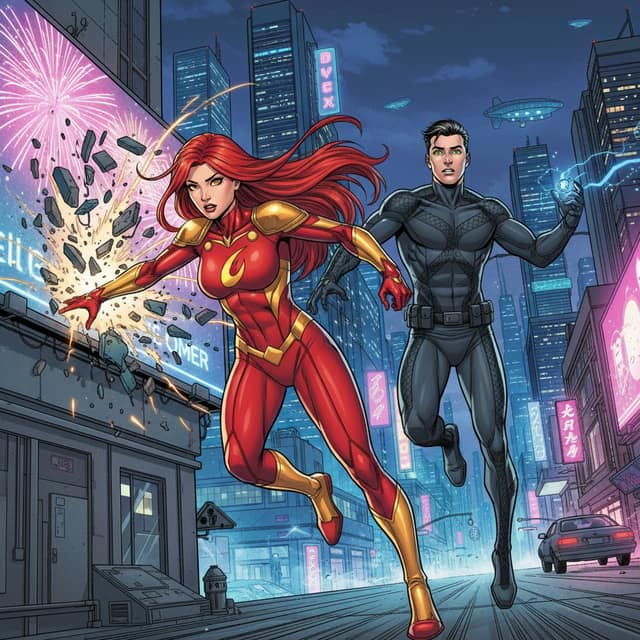
A superhero comic generator is AI tuned for the Western cape-and-cowl tradition — rendered musculature, heavy inks, high-contrast lighting, impossible camera angles.
Comicory's superhero style is the right pick for origin stories, team books, villain-of-the-week arcs, and anything that wants punch-you-in-the-face energy.
What the Superhero Style Delivers
Superhero style borrows from Kirby, Lee, Jim Lee and modern Marvel/DC pencillers. Expect dynamic foreshortening, dramatic shadow, action-blur inks and the occasional explosive splash page.
Your hero's costume locks in via character references so every panel and every chapter stays consistent.
Origin Story Arcs
Give Comicory your hero's setup paragraph. The AI drafts the big-moment panels — power discovery, first fight, costume reveal.
Team Books & Rosters
Multiple characters in one script — each gets their own reference portrait so the whole team stays on-model across every chapter.
Ongoing Cape Series
Use Continue Story (Create next chapter) to keep the run going. Chapter after chapter with the same hero, same costume, same world.
Superhero vs. Manga vs. Noir
Superhero style is louder and more kinetic than manga (which uses screentones and quieter paneling) and brighter than noir (which leans on heavy shadow and muted palettes). Use superhero when the story is about power, identity, and big action beats.
Questions
About this generator.
Yes. Describe both in your story and the generator creates a separate reference portrait for each. Both stay on-model across every panel — hero in the foreground, villain in the shadow, both consistent.
It's built for them. Dynamic poses, dramatic foreshortening, action lines, and high-contrast lighting are the defaults. Fight scenes, flight shots, and splash reveals render naturally.
No — avoid describing copyrighted characters by name or recognizable costume. Instead describe your own original hero (powers, costume, silhouette). The reference-portrait system will lock your hero in and keep them consistent without needing IP that Comicory can't reproduce.
Very good. The style renders transformation moments, costume reveals, and first-power scenes with appropriate drama. Use Continue Story (Create next chapter) for the follow-up arcs — villain of the week, team-ups, and so on.
Keep exploring
You might also like.
Ready when you are.
Start with a paragraph.
Finish with a comic.
Sign up free and get 10 one-time credits — the script plus a 4-panel comic with 1 character and 1 location. No card.