Comicory
Manhwa Generator
Korean webcomics. Vertical. In color.
A manhwa generator built around Korean webcomic conventions — vertical scroll pacing, full color, romance and action-fantasy tropes — not just 'manga but in Korean.' If you've ever asked why your manga generator's panels feel wrong for a webtoon, this is why.
Manhwa is the Korean cousin of manga, but the two diverge in ways most AI tools ignore.
Manga reads right-to-left in black-and-white spreads; manhwa reads top-to-bottom in full color, designed for phone scrolling.
Manhwa romance and action-fantasy dominate the global webcomic charts — Tower of God, Solo Leveling, True Beauty — and the visual conventions (close-up faces, soft color gradients, vertical action scenes that scroll past the eye) come from that scroll-native format.
This generator is tuned for those conventions, not flipped manga panels.
What Makes Manhwa Different from Manga
Three structural differences shape the entire generation pipeline — reading direction, color, and pacing. Each one cascades into prompt design and panel layout.
Vertical Scroll, Not Page Spreads
Manga panels live on a printed page; you read both sides at once. Manhwa panels stack vertically and scroll past your thumb. Pacing comes from gap size between panels, not from gutter geometry.
The manhwa generator outputs panels sized for that flow — taller aspect ratios, deliberate breathing room.
Full Color, Soft Palettes
Manga is overwhelmingly black-and-white with screentone shading. Manhwa is full color, usually with soft palette transitions — peach skies, cool indoor blues, warm sunset oranges. The generator applies Korean webcomic-style color grading by default.
Close-Up Emotional Beats
Scroll-native pacing rewards close-up face panels — they fill the phone screen and force a beat. Manhwa romance lives on these close-ups. The generator weights character framing toward closer shots than a manga generator would, matching the genre's emotional cadence.
Manhwa Genres You Can Generate
The global manhwa market is dominated by a few specific genres. The generator is tuned for each of these — try a few-paragraph story in any of them and the renderer applies genre-appropriate conventions.
Romance Manhwa
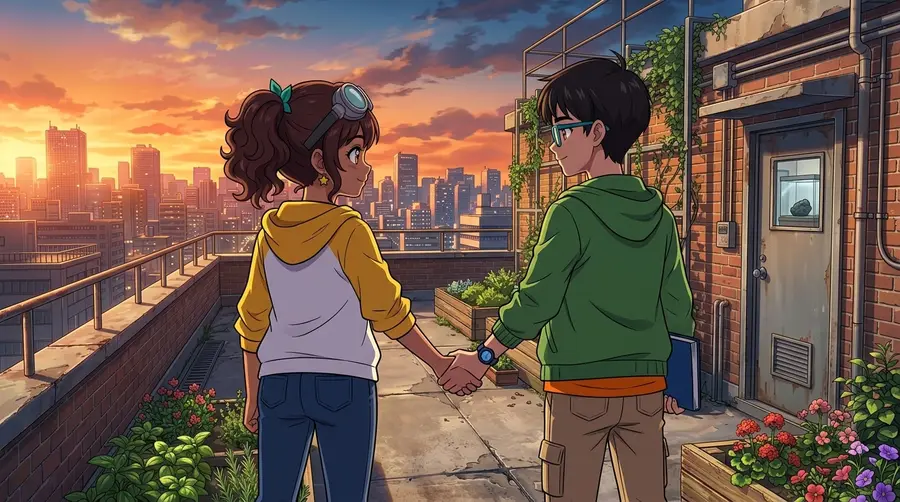
School romance, office romance, isekai romance, historical Korean romance. Soft palettes, expressive close-ups, decorative background flowers and sparkles when the protagonist gets flustered. The largest global manhwa genre by readership.
Action-Fantasy / Isekai
Tower of God / Solo Leveling territory — hunter-licensing systems, magic stats, modern Seoul meets fantasy dungeons. Action panels stretch vertically to make hits hit harder when the reader scrolls past them.
School & Slice of Life
Korean high-school settings, everyday-life manhwa. Cleaner panel layouts, fewer dramatic camera angles, more dialogue-driven scenes. Often the genre new readers start with.
Manhwa vs. Webtoon — Are They the Same?
'Webtoon' is the format (vertical-scroll digital comic, originated in Korea via Naver's WEBTOON platform). 'Manhwa' is the country origin — all Korean comics, including print. In practice, modern Korean webcomics are both — they're manhwa published in webtoon format.
The terms get used interchangeably in English. This generator uses 'manhwa' for the Korean-origin aesthetic — color, vertical scroll, romance-and-fantasy tropes — and our webtoon generator covers the broader vertical-scroll format including non-Korean webtoons.
Questions
About this generator.
No. Manga is Japanese, traditionally black-and-white, and reads right-to-left in printed spreads. Manhwa is Korean, predominantly full color, and originated as vertical-scroll webcomics for phone reading. Visually they share anime-adjacent character styling but diverge sharply on color, reading direction, and panel pacing. The generator treats them as separate aesthetics.
Webtoon is the format — vertical-scroll digital comic. Manhwa is the country of origin (Korean). Modern Korean webcomics are usually both: manhwa published in webtoon format. In English usage they're often interchangeable; we keep them as separate landing pages because the searches differ — 'manhwa' implies Korean aesthetic specifically, 'webtoon' is format-agnostic.
Yes. Action-fantasy is one of the two dominant manhwa genres (alongside romance). Give the generator a story about hunters, stat systems, dungeons, or fantasy-modern Seoul and it'll render vertical action panels with the high-contrast color work the genre uses. The character reference system lets you pin a protagonist across chapters.
The panels are rendered scroll-friendly (taller aspect ratio, designed to read top-to-bottom), but the final output is still individual PNG panels — you assemble them into a scroll or grid layout. The comic-page-layout tool handles the vertical stacking; manhwa works in either single-page or scroll presentations.
Yes. Output is full-resolution PNG suitable for re-uploading to WEBTOON Canvas, Tapas, or Tappytoon as your own work — clean on any paid plan or credit pack, with a small corner badge on free-tier exports. No tier restricts commercial use; the constraints are your credit balance and that badge.
English is fine. The AI script writer accepts plain English, generates panel breakdowns in English, and renders panel text (signs, dialogue placeholders) in English by default. If you want hangul signage or Korean text in panels, prompt the renderer specifically — but most English-speaking manhwa creators publish in English.
Keep exploring
You might also like.
Ready when you are.
Start with a paragraph.
Finish with a comic.
Sign up free and get 10 one-time credits — the script plus a 4-panel comic with 1 character and 1 location. No card.