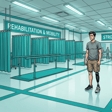

The Finished Comic
AI-generated with Comicory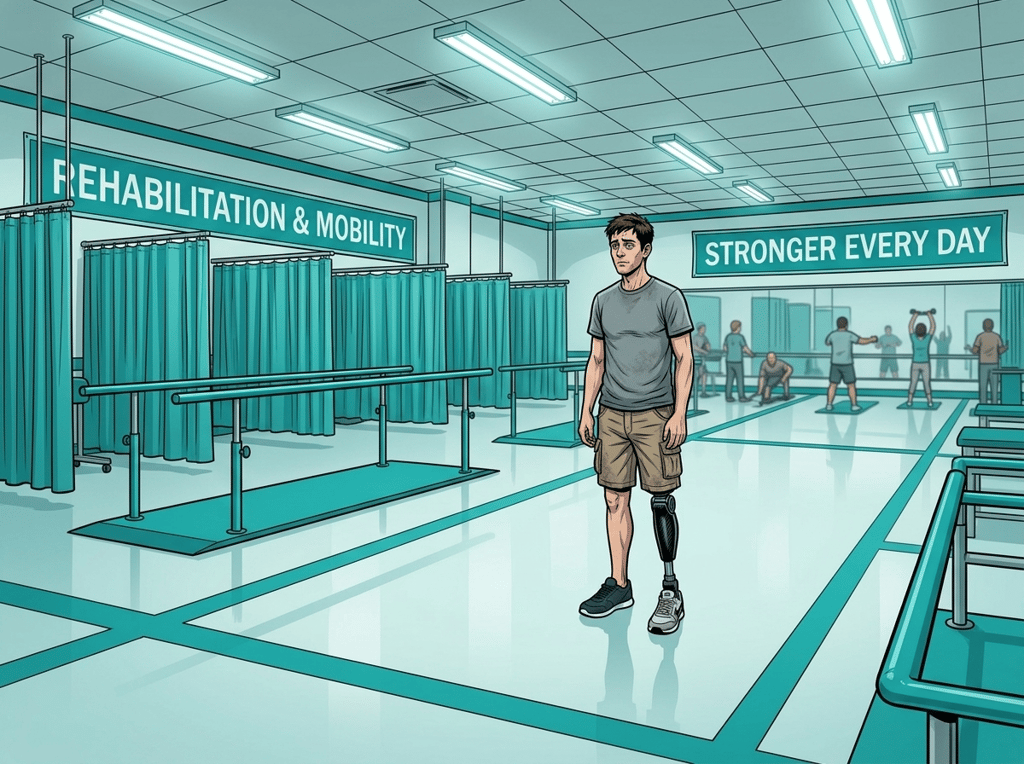
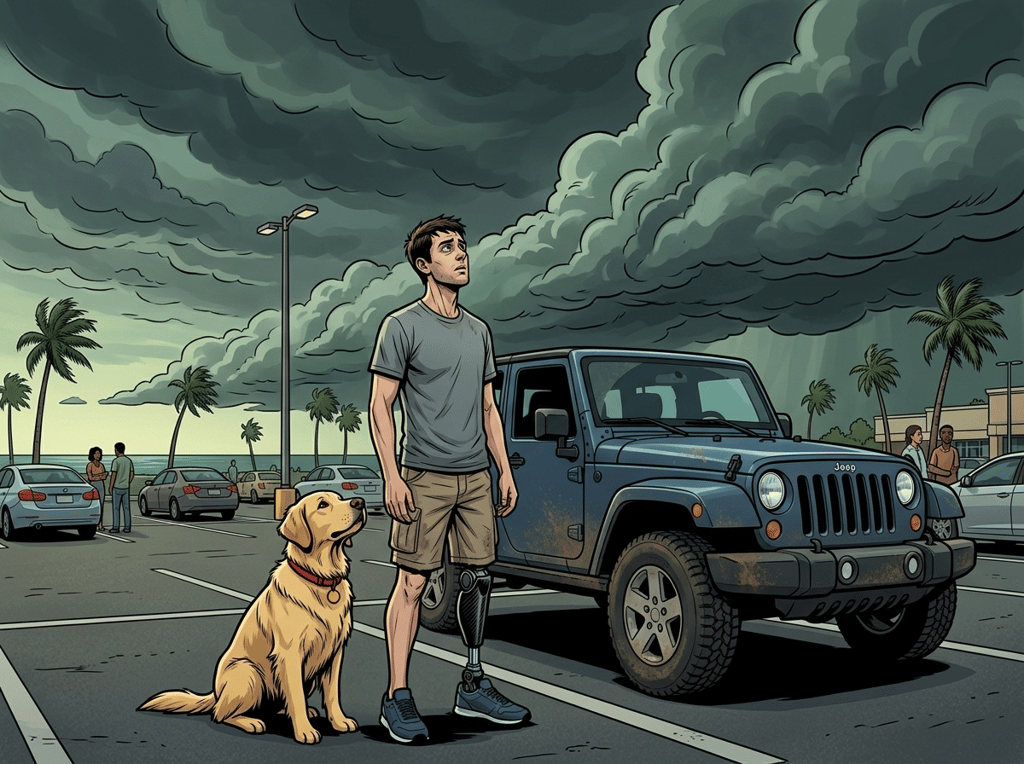
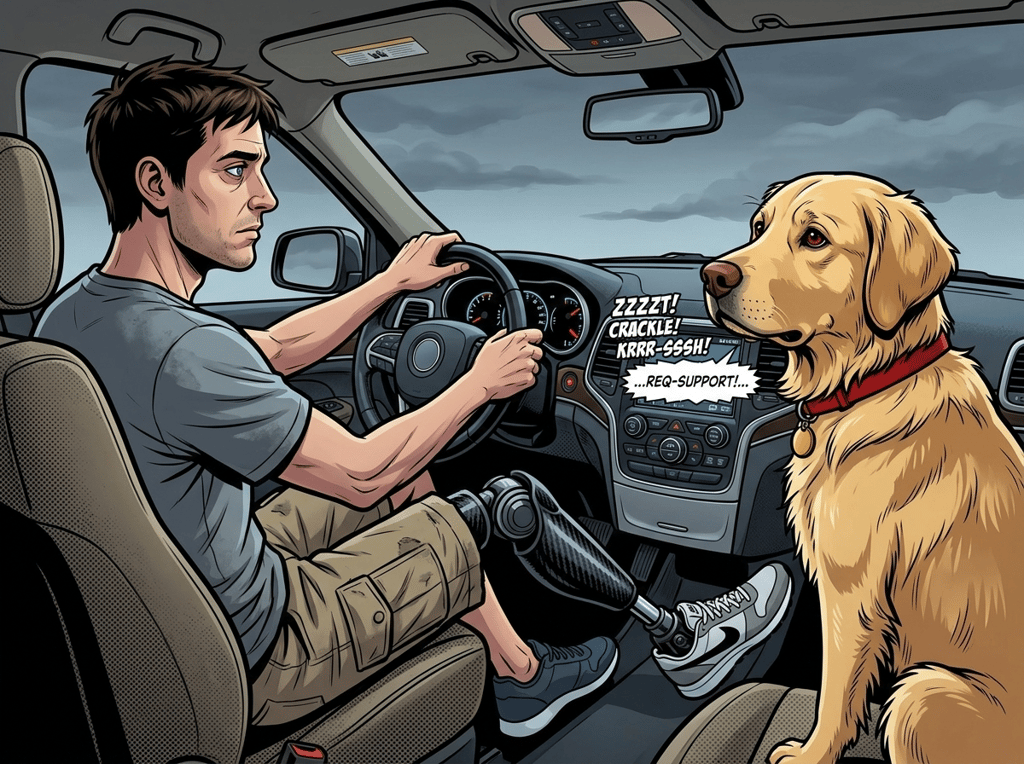
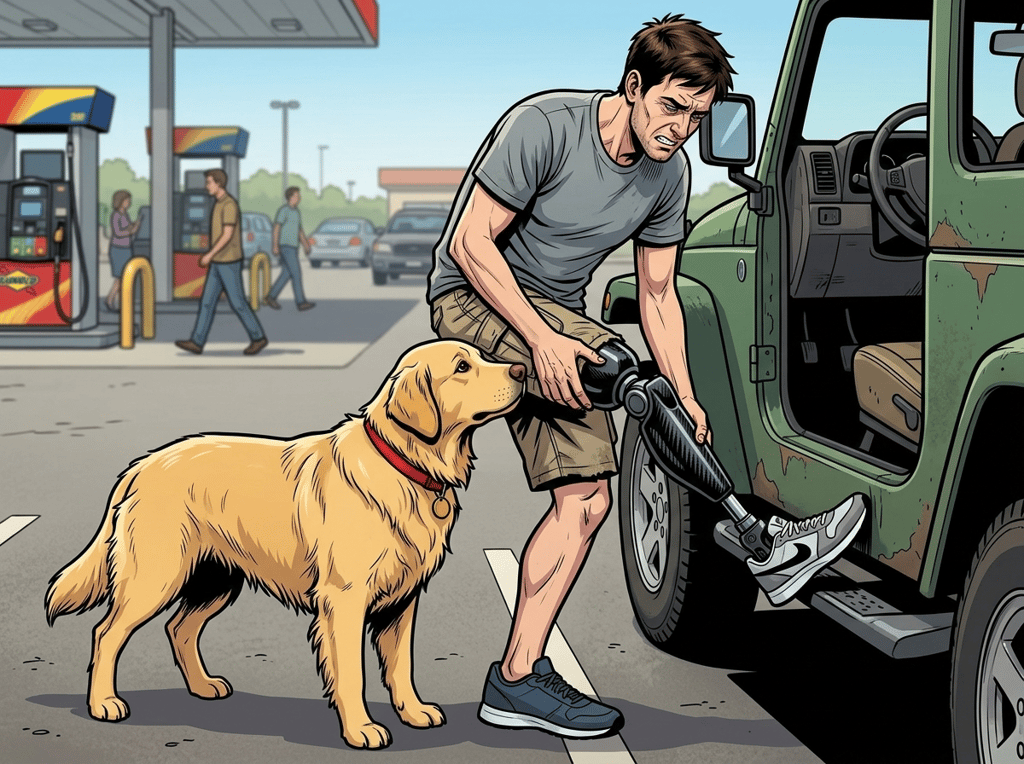
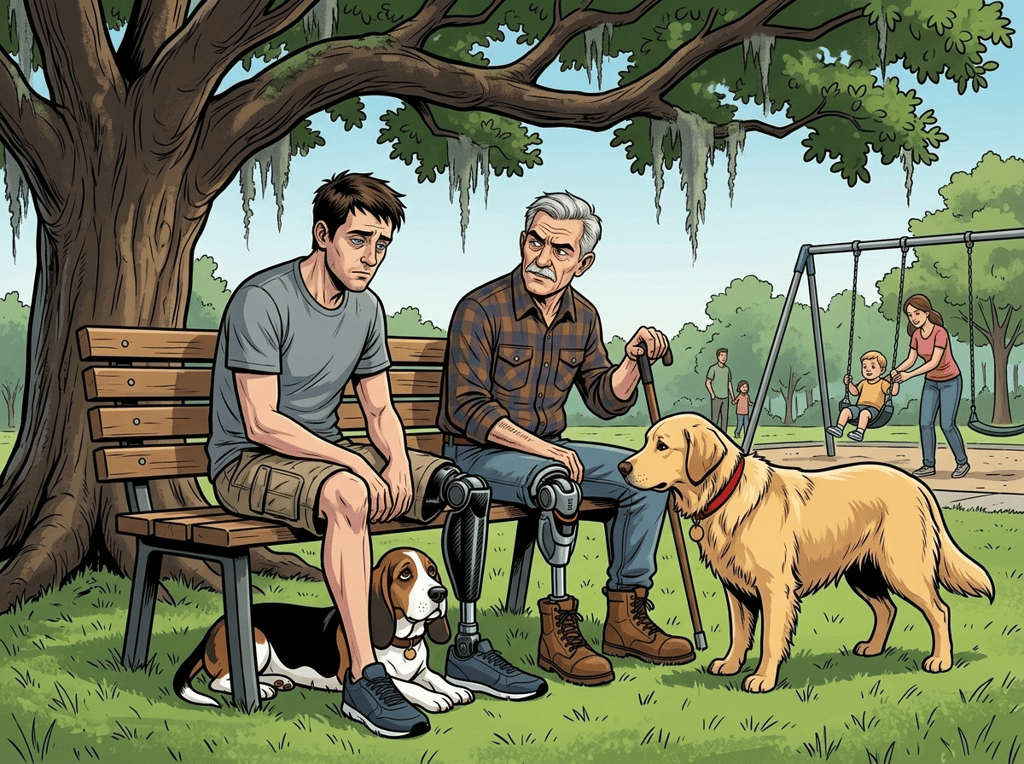
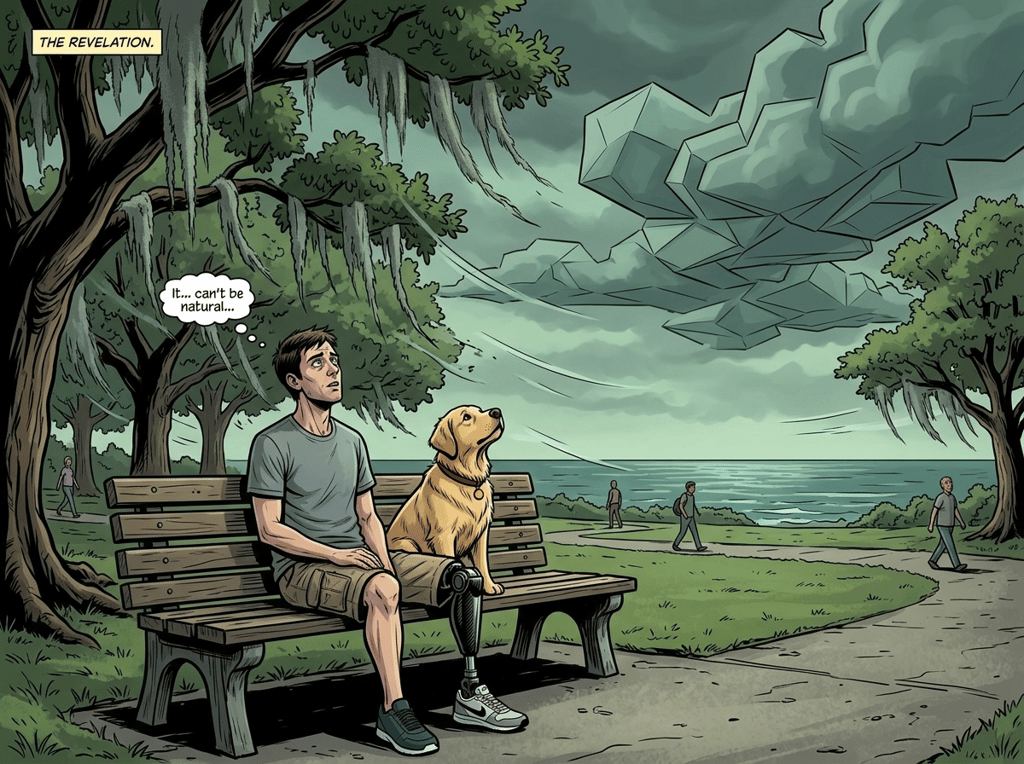
Story Prompt
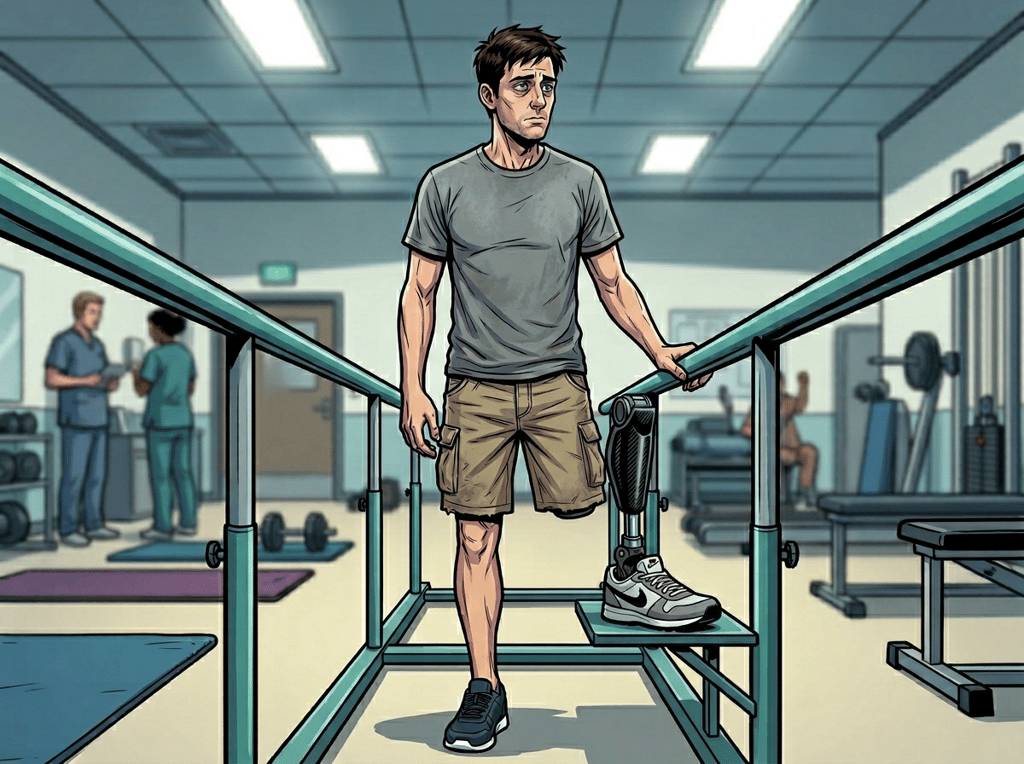
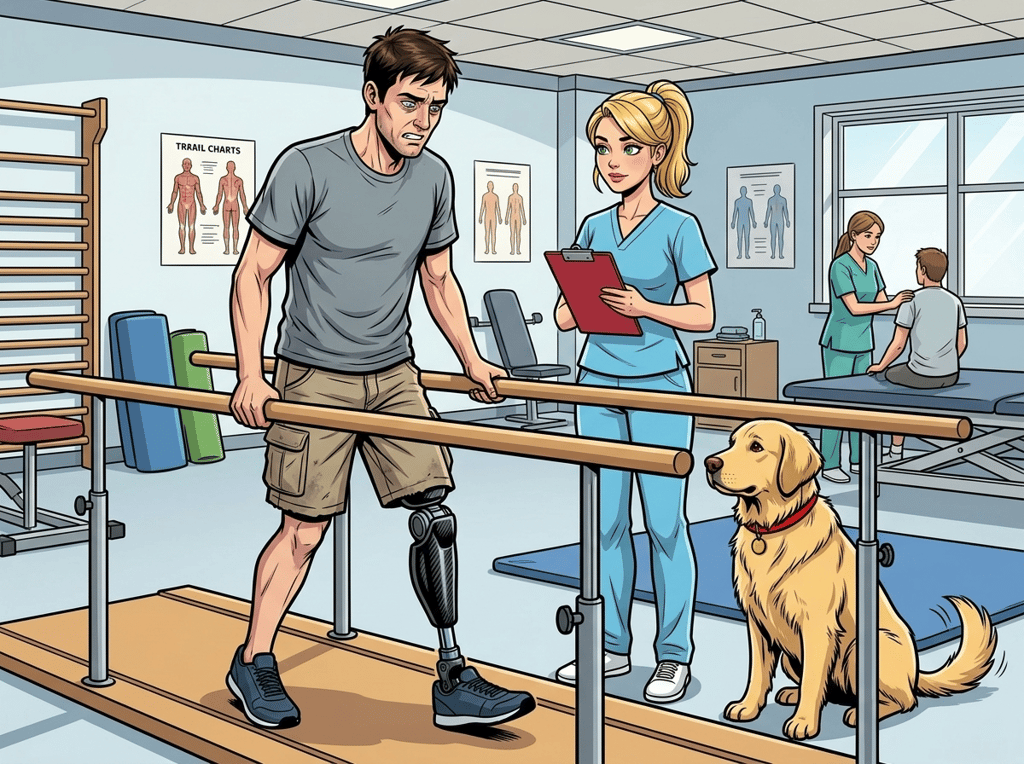
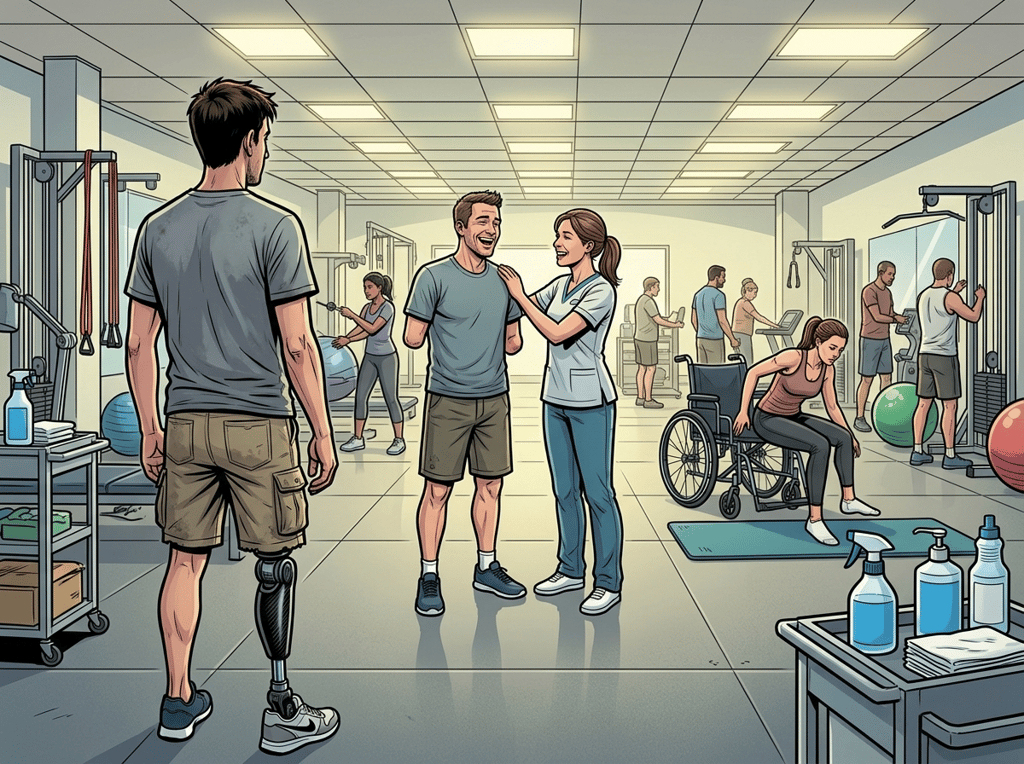
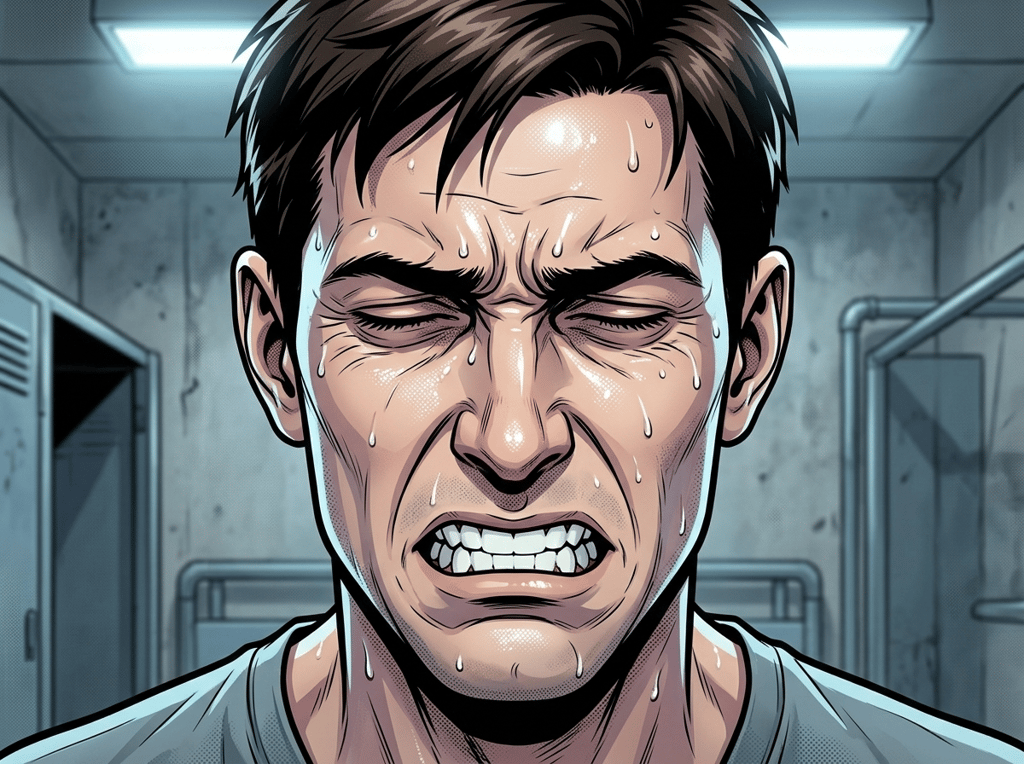
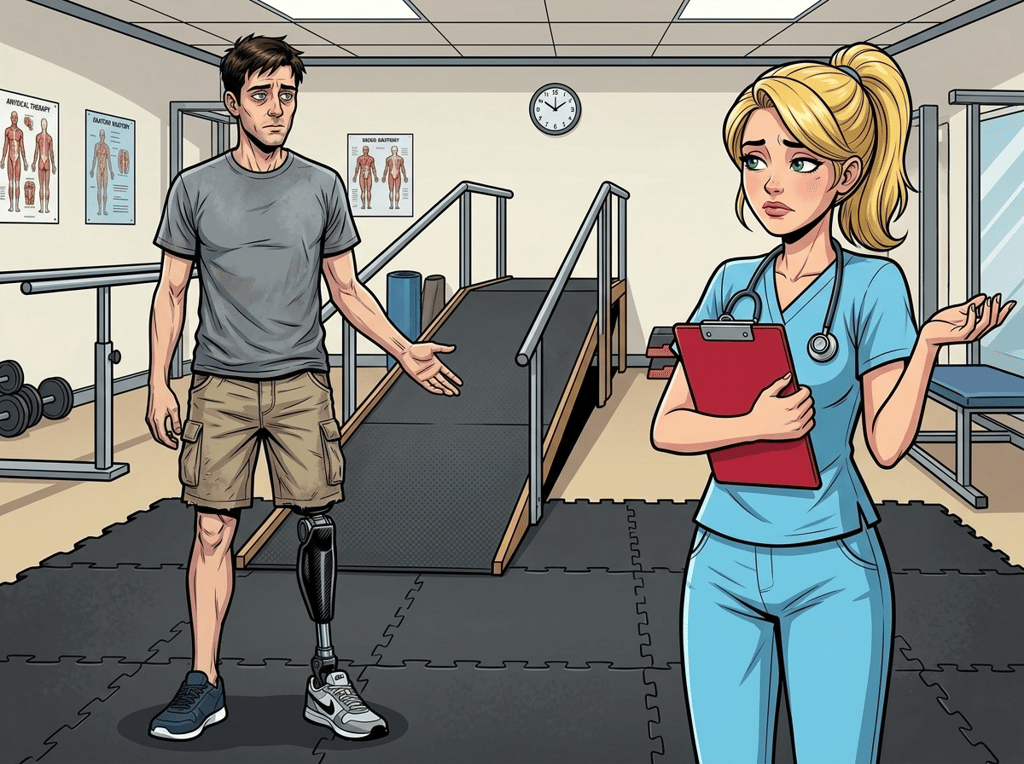
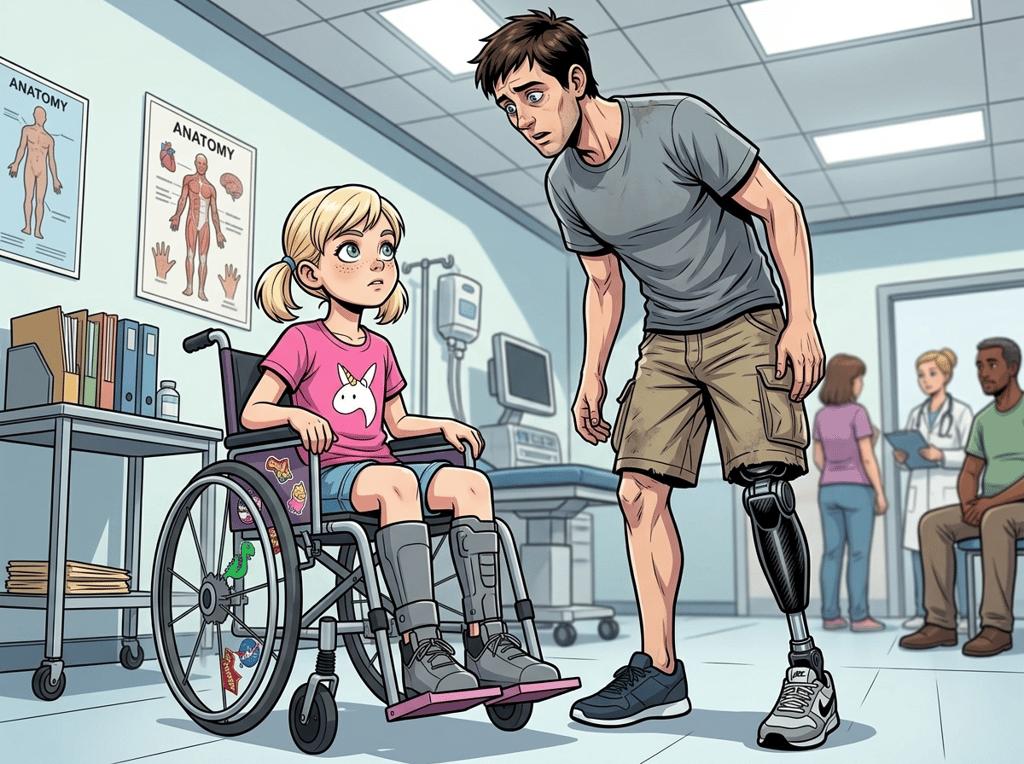
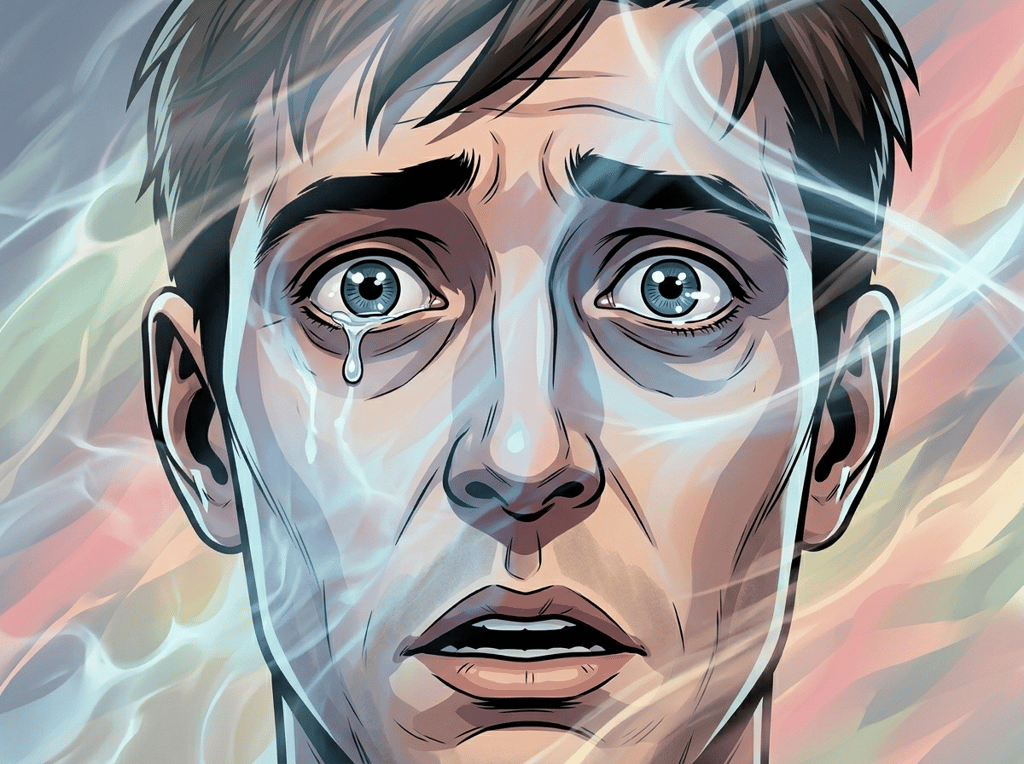
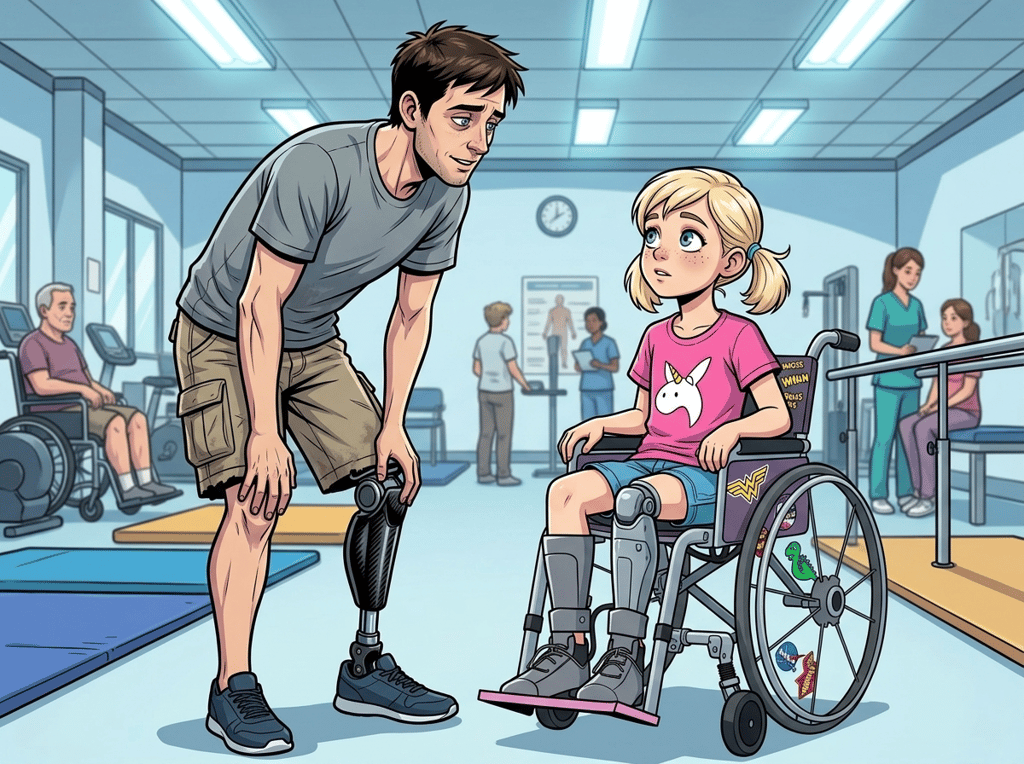
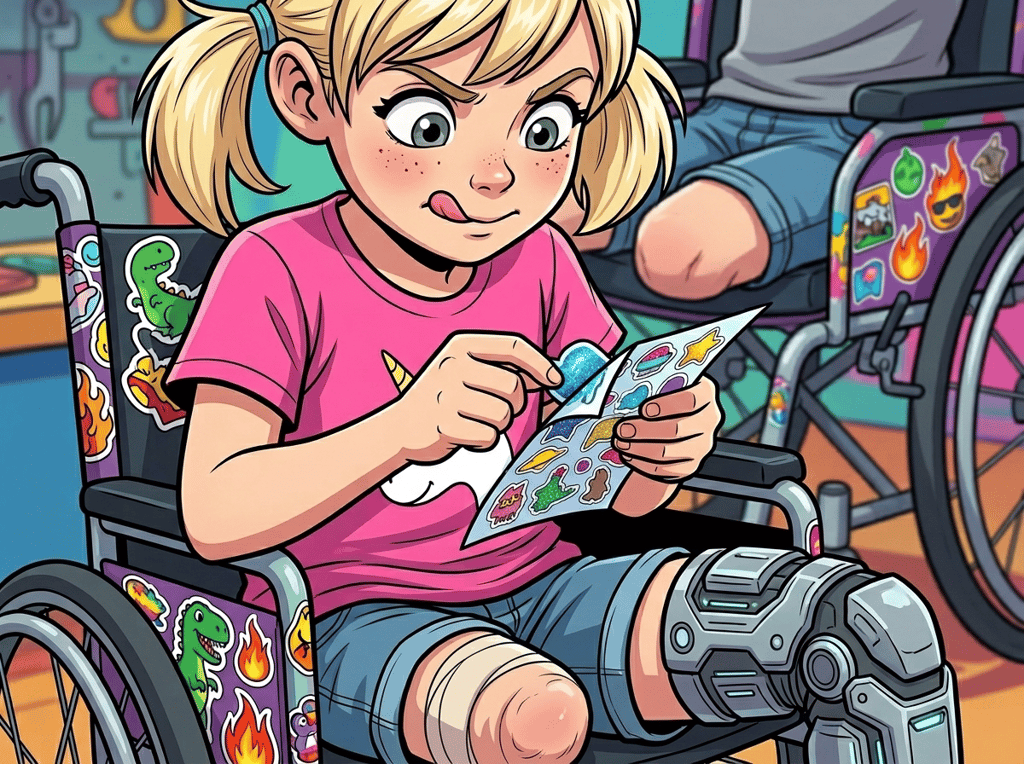
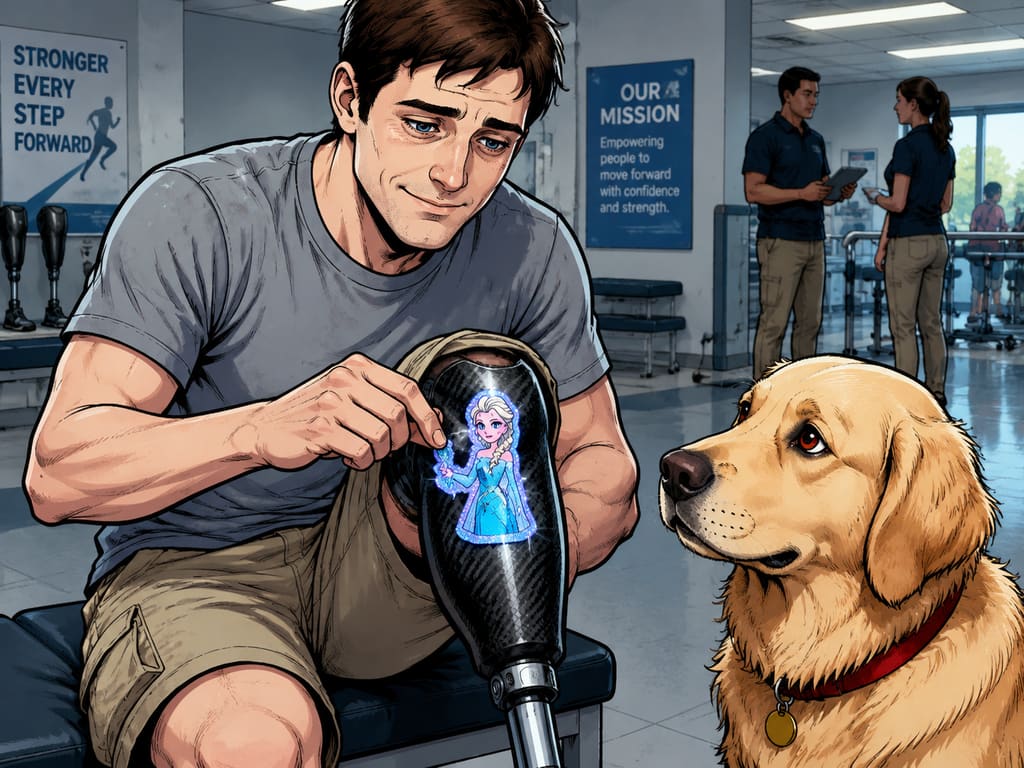
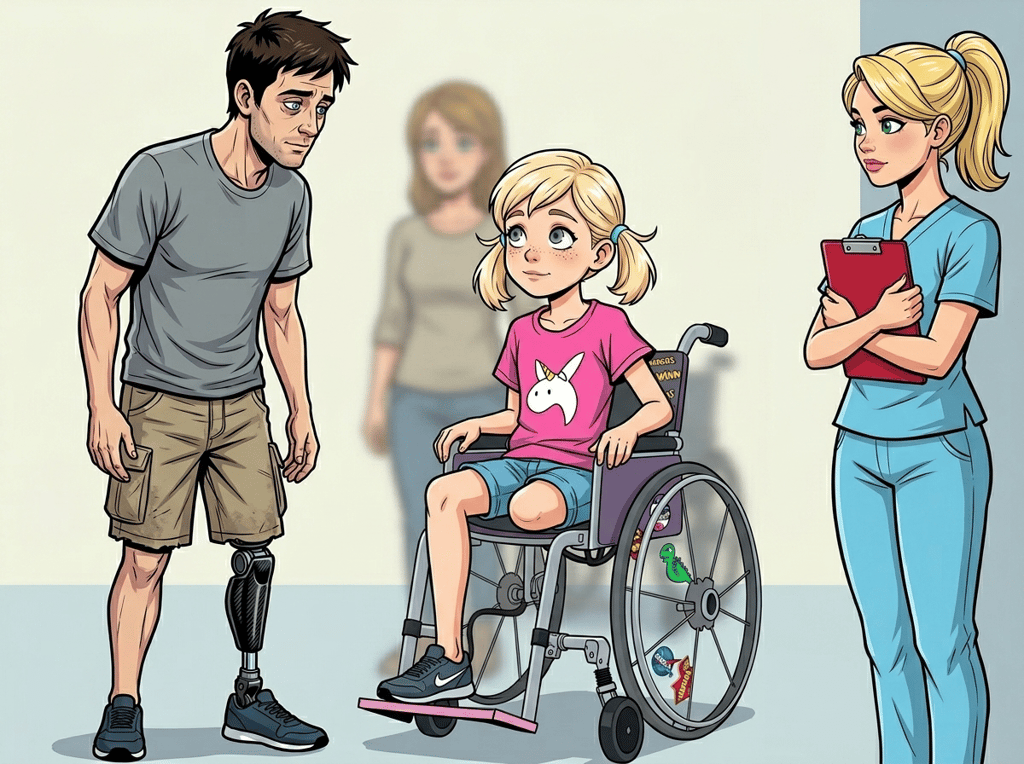
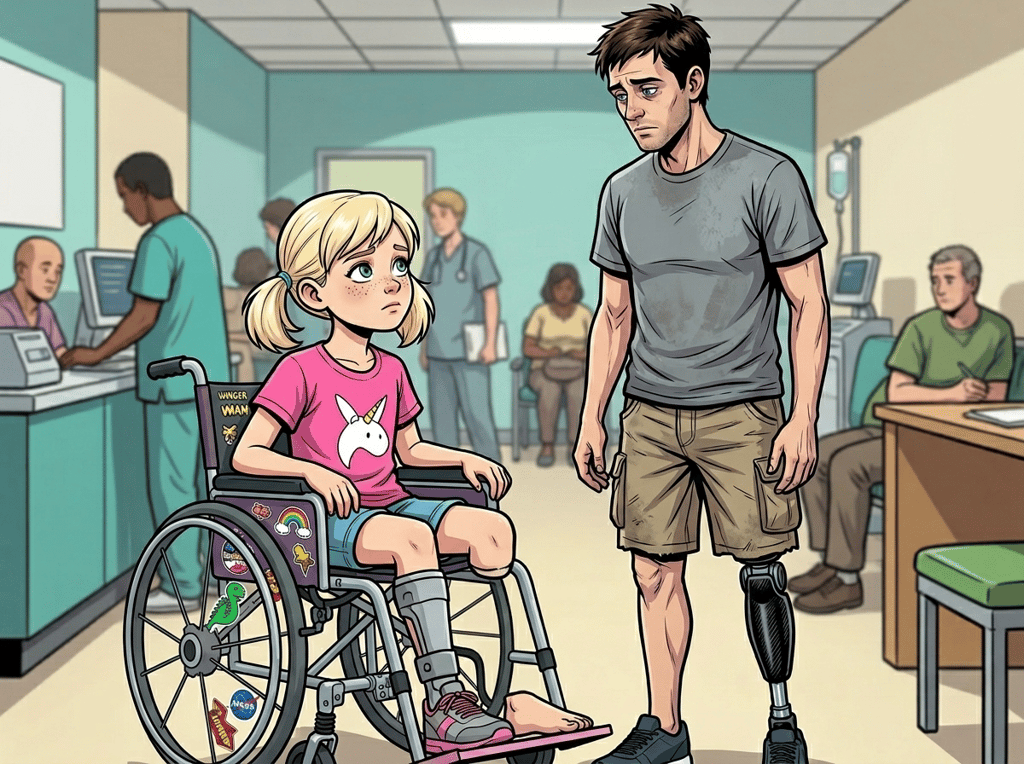
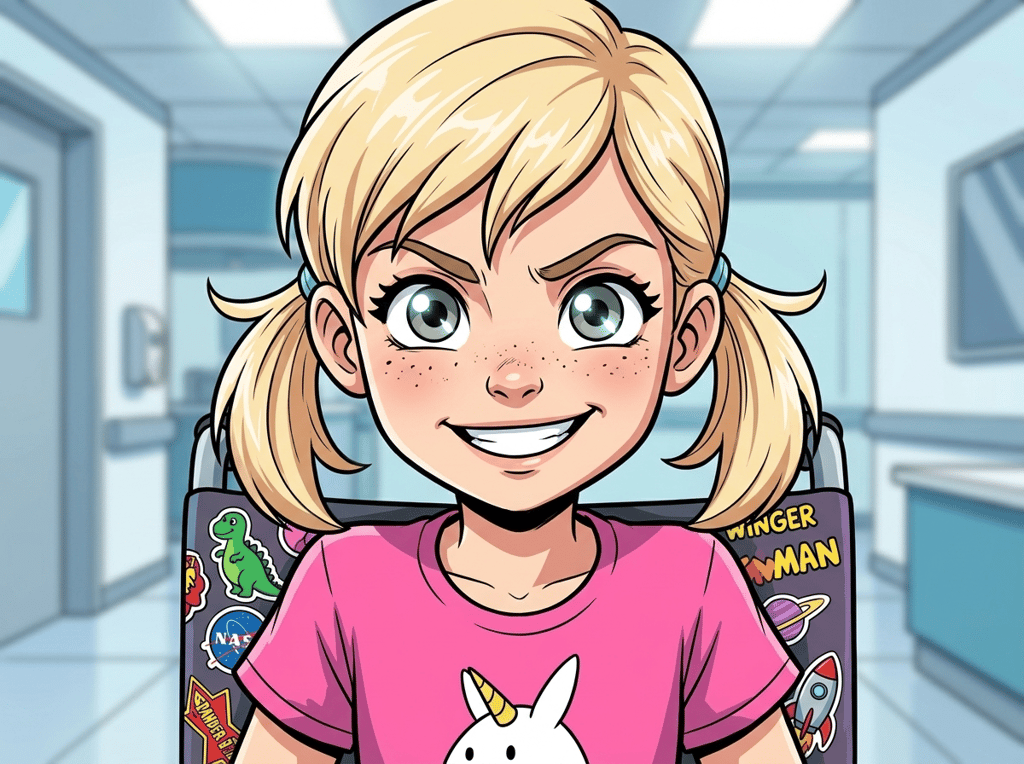
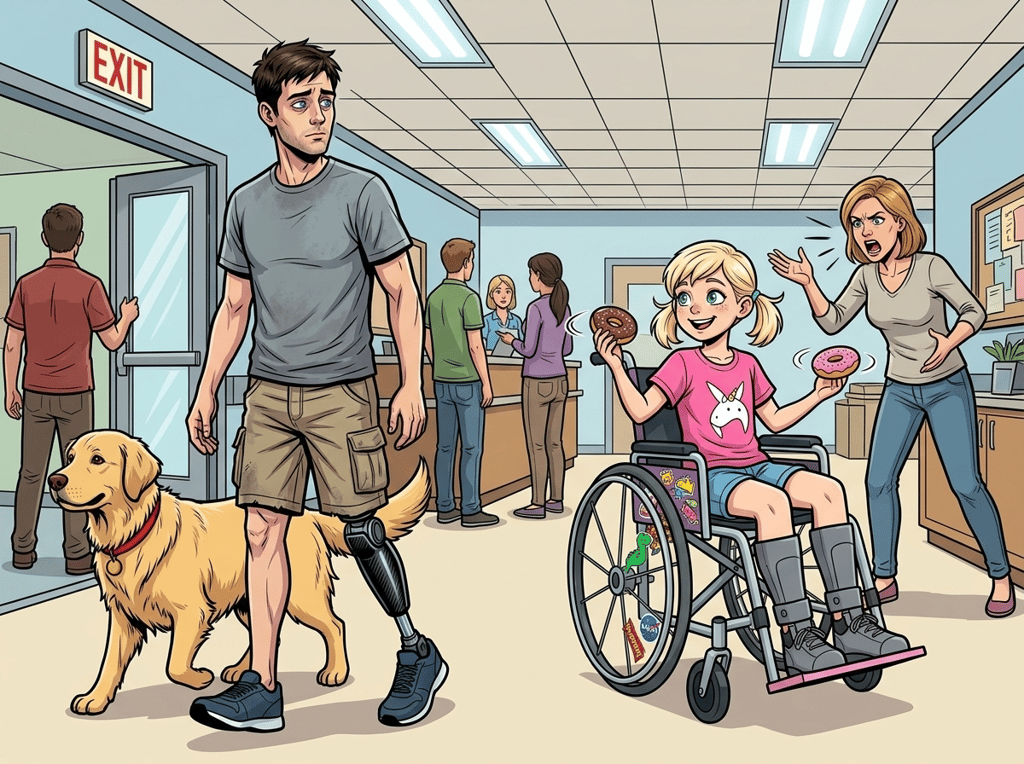
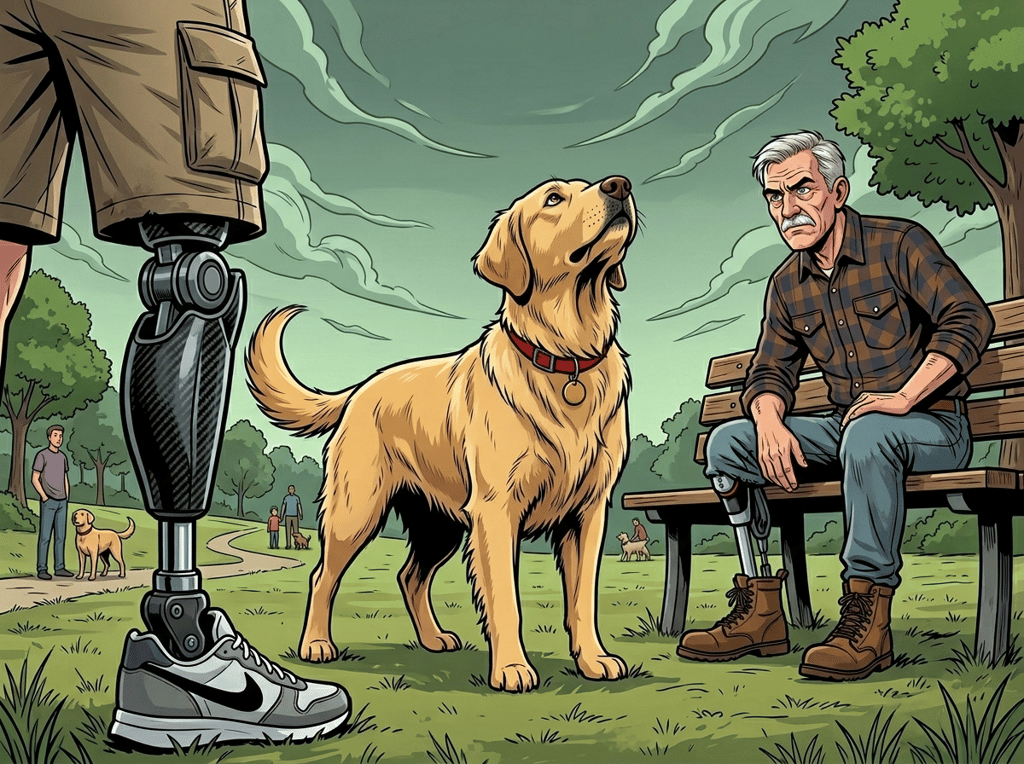
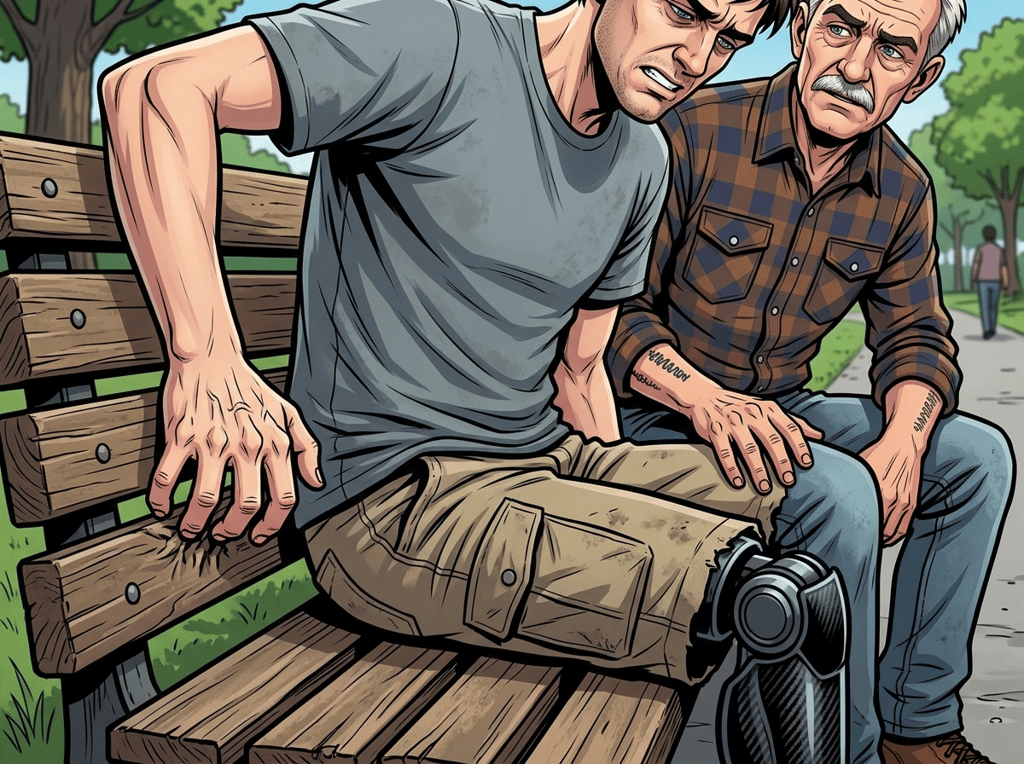
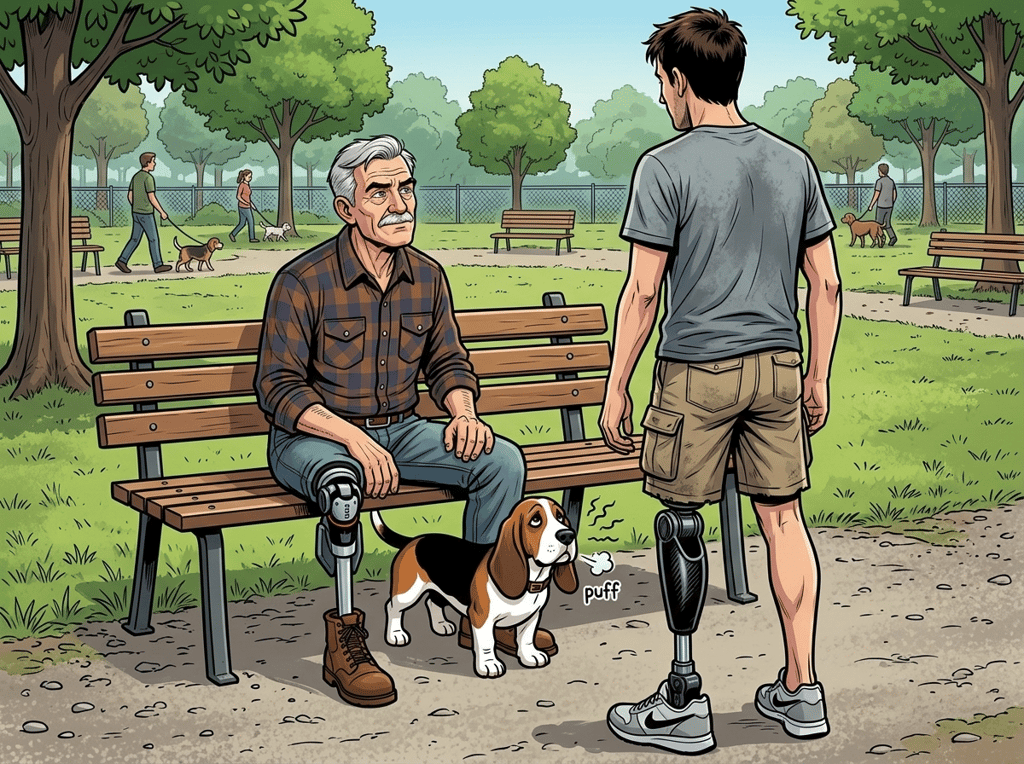
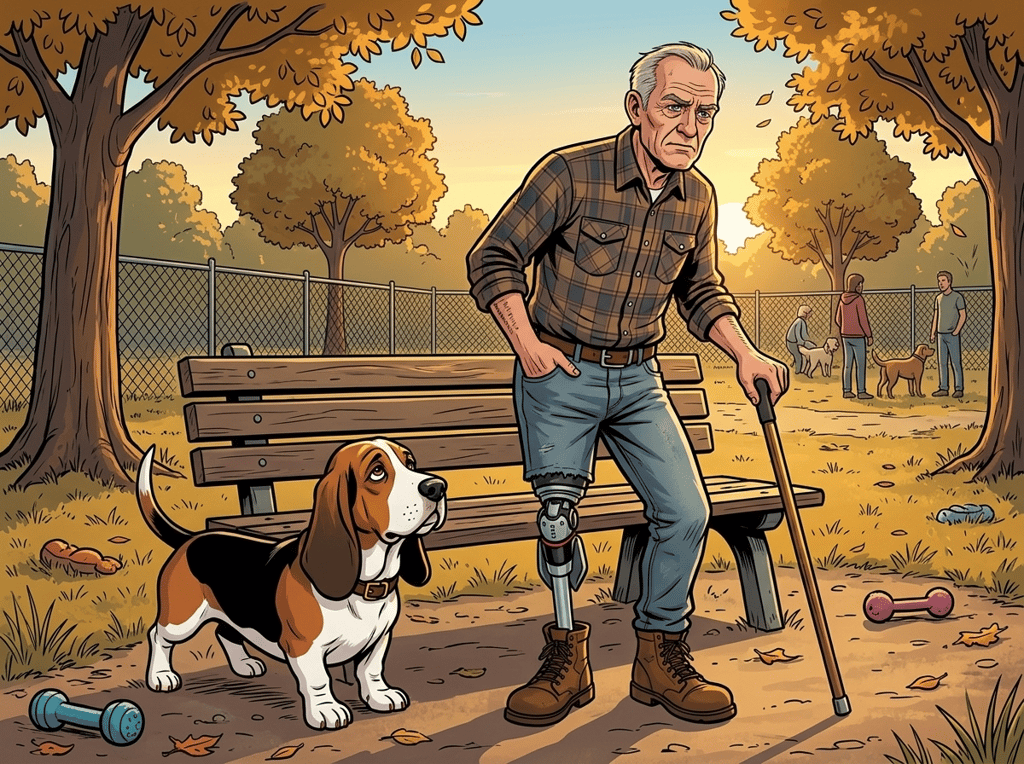
Written by Andrew BiggartShow moreI have learned to hate the color teal. At Hernando County Rehabilitation Center, teal is the national flag: banners on the walls, partition curtains, the rails on the parallel bars. Even the mop buckets and bleach-splattered floor tiles are trimmed in it. The receptionist calls it calming, as if a color palette could outmuscle the stench of antiseptic, the timer-shrieks, or the frantic counterpoint of limbs learning to work without their missing partners. My right leg, or what I call my right leg, rests against the foam padding of the parallel bars like an alien tool in a museum. The socket is black and curved like Vader himself designed it, the carbon fiber sleek and holographic with a titanium piston that connects to a rubber foot inside a grey and white Nike. Watson waits at the end of the rails, head canted, tail beating slow, insistent Morse. I take three more steps, each one better measured than the last, and try not to grimace as the liner digs into the raw skin at my stump. I know how the rest of me looks: boxy and underfed, six years after the car accident and still finding reasons to face the wall when I brush my teeth. This morning’s ritual: twenty-three minutes of negotiation. Vitamin E oil worked into the scar tissue. The silicone liner rolled on, its cool gel a shock against raw nerve endings. Two stump socks, one thin, one thick, to account for the swelling. Then the socket slides home and the pin-lock finds its mark. Three clicks. The sound of earning my vertical. The biological tax I pay before the day agrees to start. “Good, Andrew. Remember to push through the heel strike.” Heather’s voice carries that professional warmth physical therapists perfect—encouraging without being condescending, though the line blurs more often than I’d like to admit. Wheelchairs whisper across linoleum. Exercise bikes click in steady rhythms. Somewhere behind me, an elderly woman counts aloud through range-of-motion exercises, her voice trembling. The air smells of antiseptic and rubber mats and someone’s microwaved lunch leaking from the break room. I take another step, focusing on the weight distribution. Left leg real, right leg engineered. The prosthetic cups my residual limb below the knee, where six inches of tibia still remain. It fits well enough—custom socket molded to the uneven terrain of my stump, decent alignment at the joint, all the technical specifications met—but it still feels like a borrowed tool bolted to my body, the fit never quite forgetting its foreignness. Watson lies near the parallel bars, positioned so he can see both me and the exit. His golden coat has dulled some over the years, gray threading through the fur around his muzzle, but his dark eyes remain sharp. Alert. He watches me with the focused attention of someone who knows the difference between struggling and drowning. “How’s the phantom pain today?” Heather asks, checking something on her tablet. “Manageable,” I lie. Hector’s throwing another rager. It’s not the PT; it’s something else in the air today. A cold fire climbs from where my leg should be, the familiar burn of ice through nonexistent flesh. I named him Hector because he has the personality of an ornery wolverine on meth—a poltergeist who took up residence in my bone marrow and never learned to sleep. Two stations over, a man about my age works with ankle weights, his left arm ending just below the elbow. He jokes with his therapist about learning to tie shoes one-handed, his laughter genuine. At the mat table, a woman with spinal cord injury transfers from her wheelchair with practiced efficiency, no hesitation, no internal commentary about what she’s lost. They’ve made peace with their bodies. I’m still at war with mine. Heather’s competence makes me hate her. I try to focus on the exercises, but my body is a hot-wired go-kart, fighting the wheel even when the course is straight. Nothing sticks. Across the room, Watson is a model of discipline, trained for everything except boredom. He watches me, patient, while at home he paces with restless energy if I so much as stand. “Can I try the ramp?” I ask, not because I want to, but because I want this to end. Heather shrugs: “You know what the insurance says. But if you think you’re up for it…” She lets the sentence tail off. I’m always “up for it,” mostly because I have nothing else left to prove. I take the rubber mat incline in a series of micro-lunges, each time expecting the ankle to betray me. “Mr. Biggart?” A small voice cuts through the adult conversations. I look down. A girl, maybe eight, towheaded with the kind of pale hair that’ll darken by high school. She’s got one leg amputated above the knee, the other half-encased in a rigid brace. Her wheelchair has personality—stickers covering the armrests and back. Unicorns. Dinosaurs. A NASA logo. Wonder Woman. That snowman from Frozen. No organizational system, just joy slapped on wherever it would stick. Her eyes are gray-green, curious, and c
Make your own version of this story
Remix keeps this cast and the Comic Book style — change the story and Comicory redraws every panel.