Back to Gallery
Comic Book

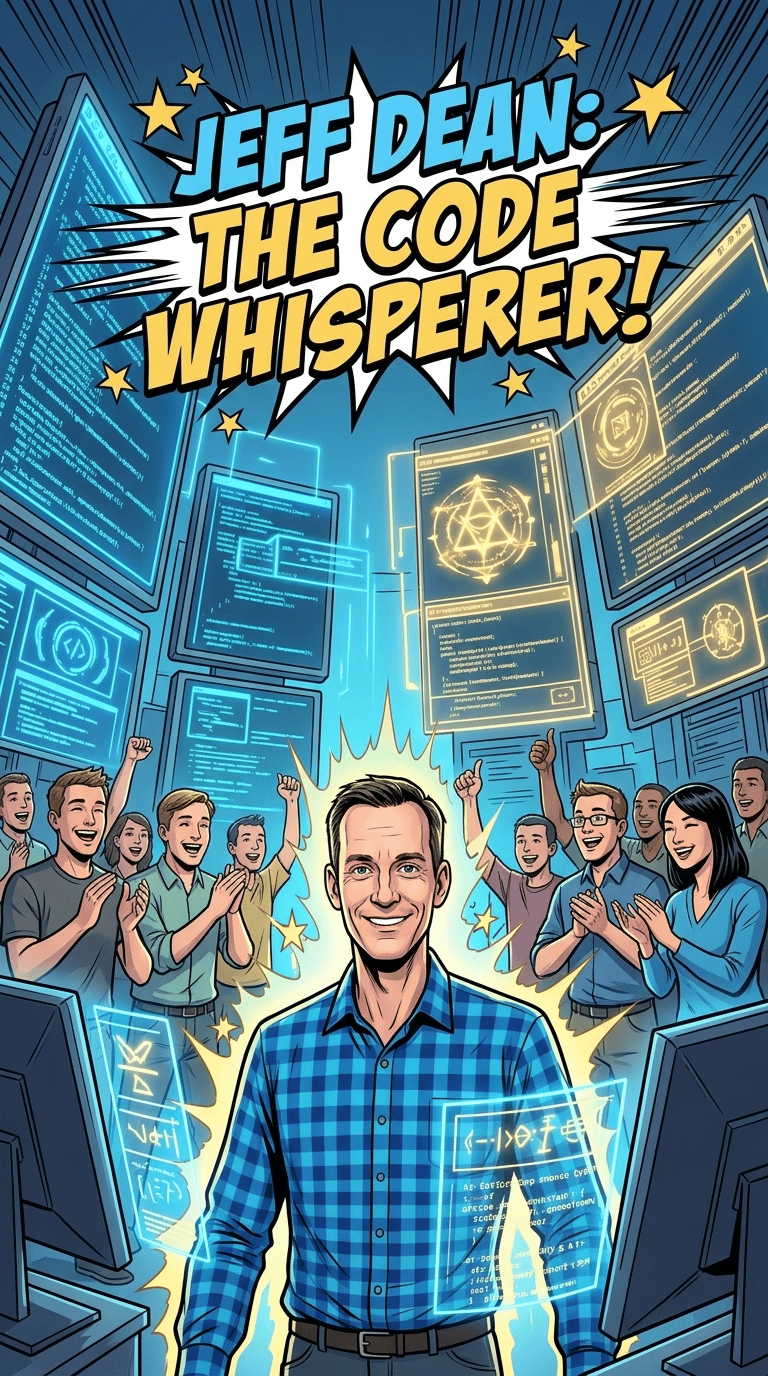
The Man Who Built Google's Brain

qcrao avatarqcrao3 pages · 18 panels8/6/2026

The Finished Comic

AI-generated with Comicory

Page01/ 036 panels
1
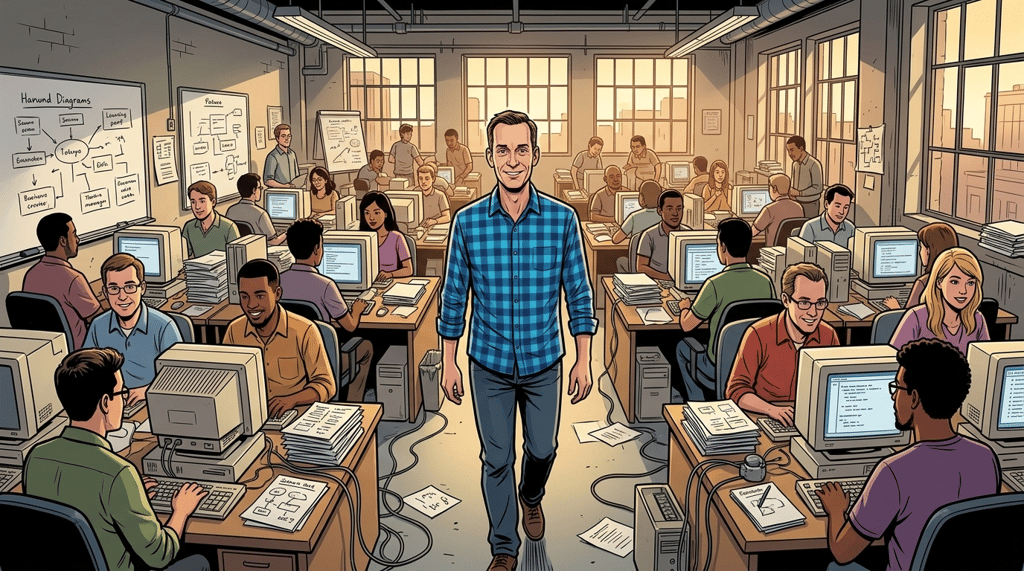
The Man Who Built Google's Brain — page 1 panel 1: In 1999, Jeff Dean arrives at a tiny, crowded Google startup office as roughly employee number thirty. He feels curious, alert, and ready to prove himself.
1999. Google was tiny, ambitious, and already struggling to keep up.
2
The Man Who Built Google's Brain — page 1 panel 2: A search request crawls across an old monitor while the server room alarms and engineers scramble. Jeff Dean sees the central problem clearly.
Search was slow. Under growing traffic, it kept falling over.
3
The Man Who Built Google's Brain — page 1 panel 3: Jeff Dean sits alone at a terminal, surrounded by diagrams of crawling, indexing, and query serving. Frustration becomes determination.
Jeff Dean
Then we rebuild the core.
4
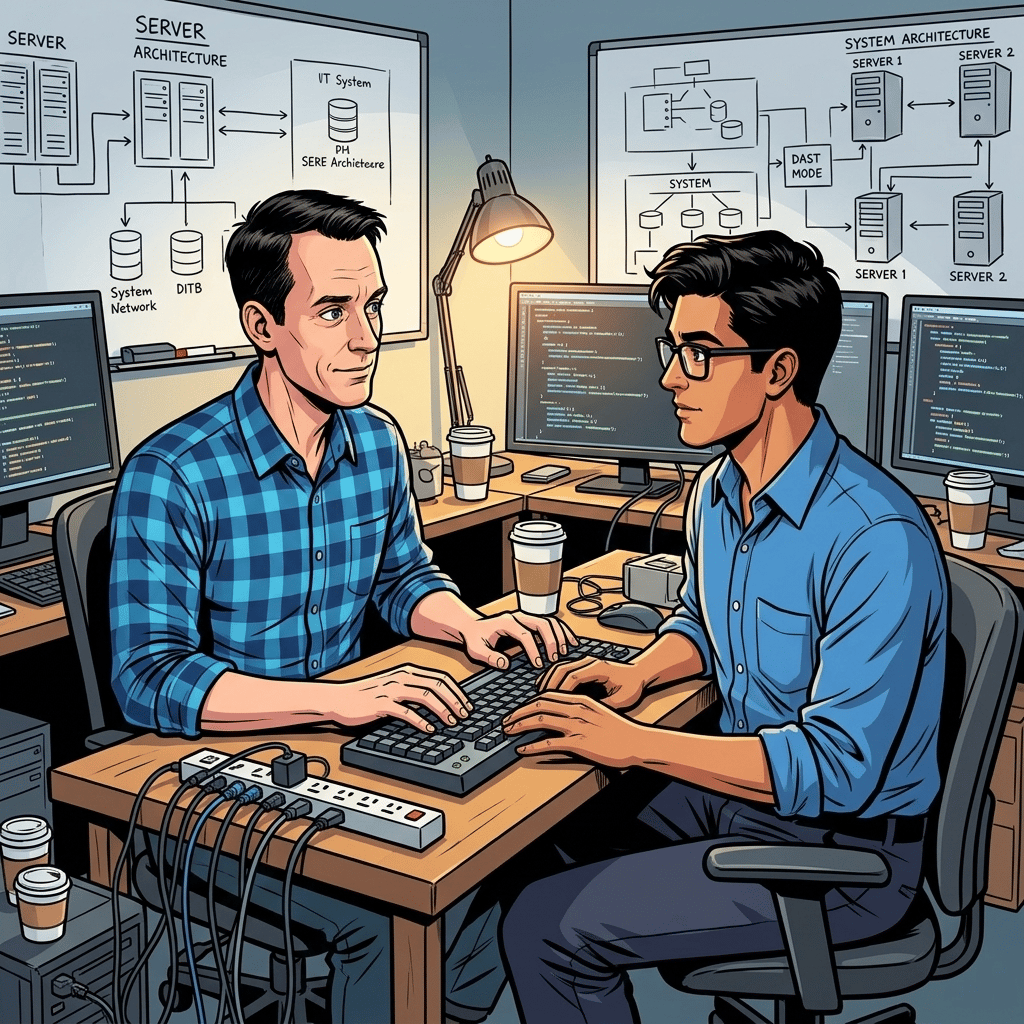
The Man Who Built Google's Brain — page 1 panel 4: Jeff Dean and Sanjay Ghemawat begin coding side by side at one keyboard, their shoulders nearly touching. Their friendship becomes a working rhythm.
Jeff Dean:You take the index. I’ll handle serving.
Sanjay Ghemawat:One keyboard. Two minds.
5
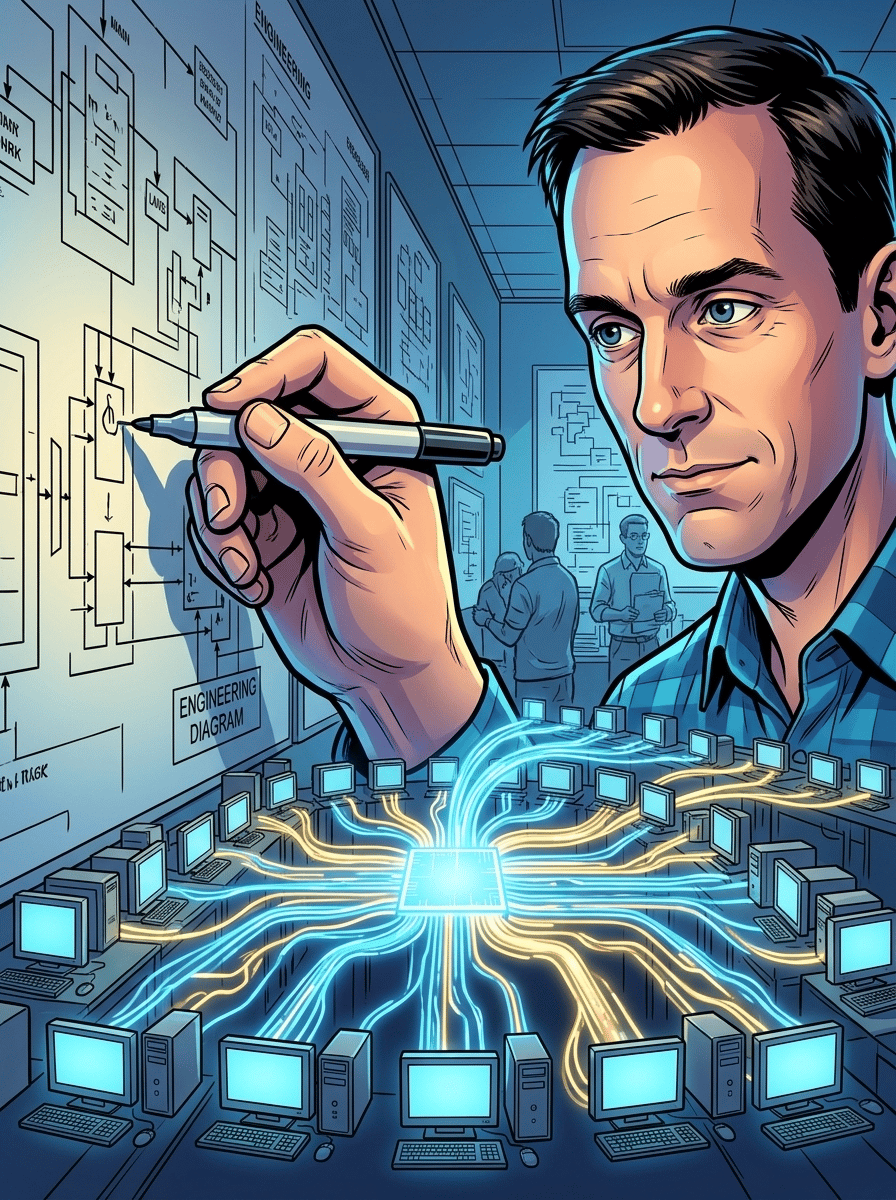
The Man Who Built Google's Brain — page 1 panel 5: A visual montage shows Jeff Dean rewriting Google's crawling, indexing, and query-serving systems through long nights. Exhaustion gives way to small signs of progress.
Night after night, Jeff Dean rewrote the machinery beneath search.
6
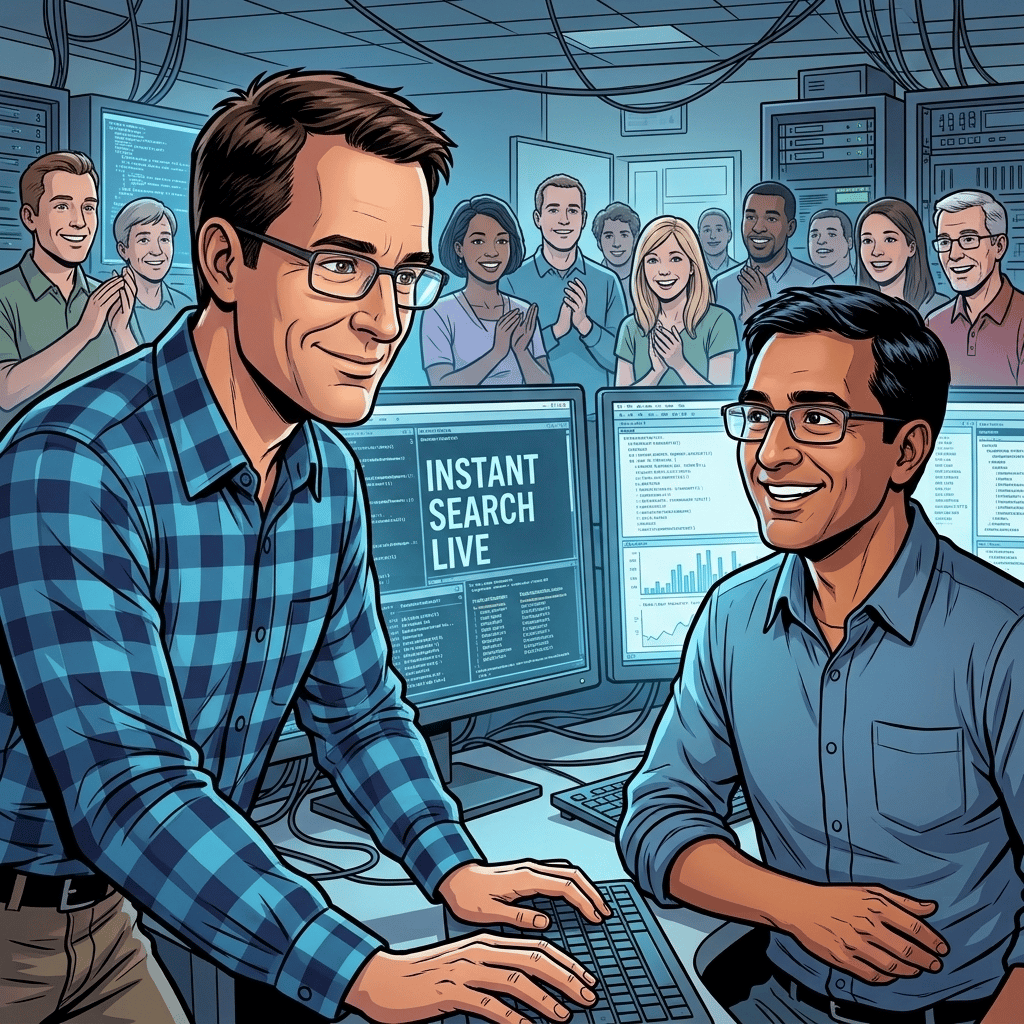
The Man Who Built Google's Brain — page 1 panel 6: Search results now appear instantly on several monitors. The engineers exchange stunned smiles as the office briefly erupts in relief.
Sanjay Ghemawat:It’s fast enough.
Jeff Dean:Now it can grow.
Page02/ 036 panels
1
The Man Who Built Google's Brain — page 2 panel 1: Jeff Dean and Sanjay Ghemawat sketch MapReduce and Bigtable across a wall, imagining thousands of cheap machines acting as one giant computer.
Jeff Dean:What if thousands of machines worked as one?
Sanjay Ghemawat:Then scale stops being the enemy.
2
The Man Who Built Google's Brain — page 2 panel 2: A detail shot shows data flowing through many small machines and converging into one powerful result. The concept feels larger than the room.
MapReduce and Bigtable made many small machines behave like one giant computer.
3
The Man Who Built Google's Brain — page 2 panel 3: The papers spread through the engineering world. Developers in different offices study printed pages and diagrams, realizing the architecture of large-scale systems has changed.
Their papers reshaped how the industry built large-scale systems.
4
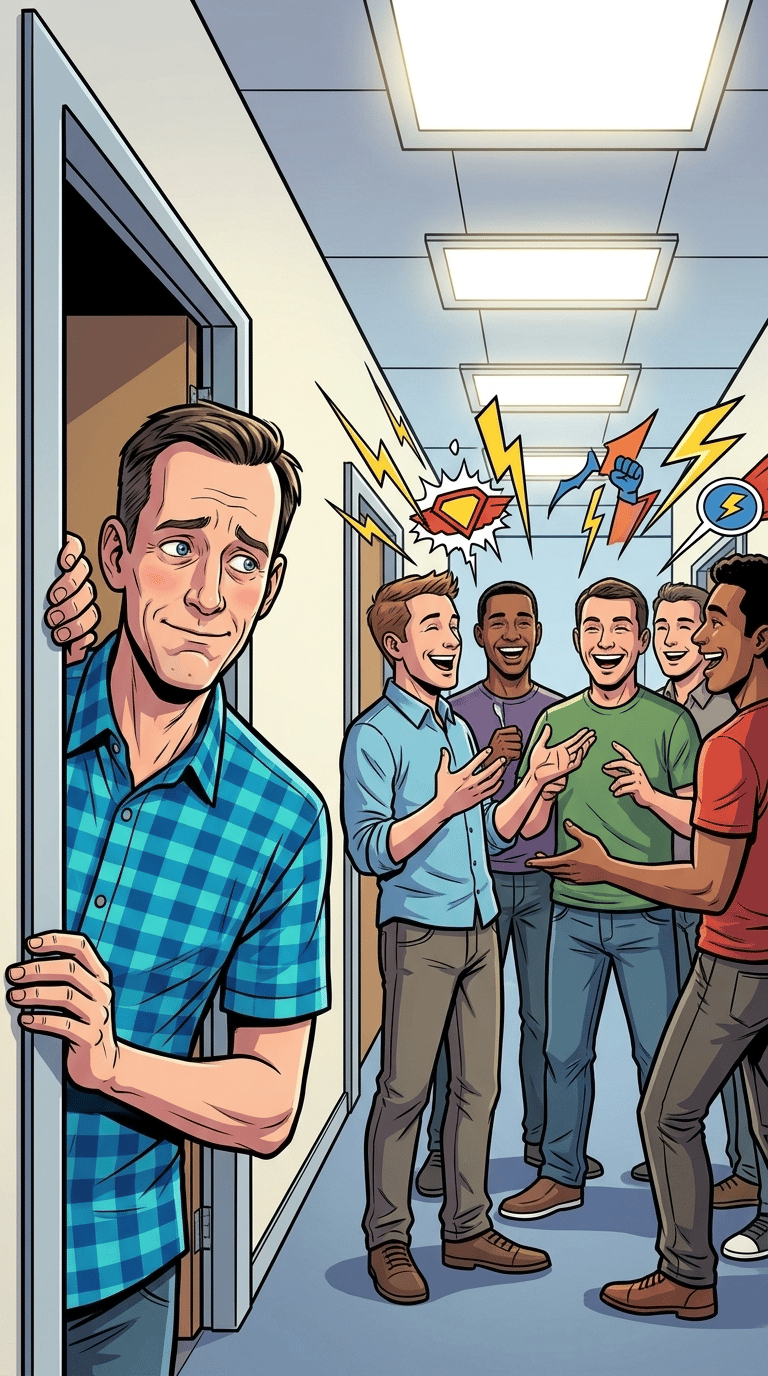
The Man Who Built Google's Brain — page 2 panel 4: Engineers trade exaggerated Jeff Dean Facts in a lively hallway, turning his technical reputation into superhero folklore. Jeff Dean overhears them with quiet embarrassment.
Soon, engineers traded Jeff Dean Facts like superhero legends.
Jeff Dean:Please stop making me sound mythical.
5
The Man Who Built Google's Brain — page 2 panel 5: A dramatic comic-style image presents the famous joke: compilers do not warn Jeff Dean; Jeff Dean warns compilers. The legend grows beyond the facts.
“Compilers don’t warn Jeff Dean — Jeff Dean warns compilers.”
6
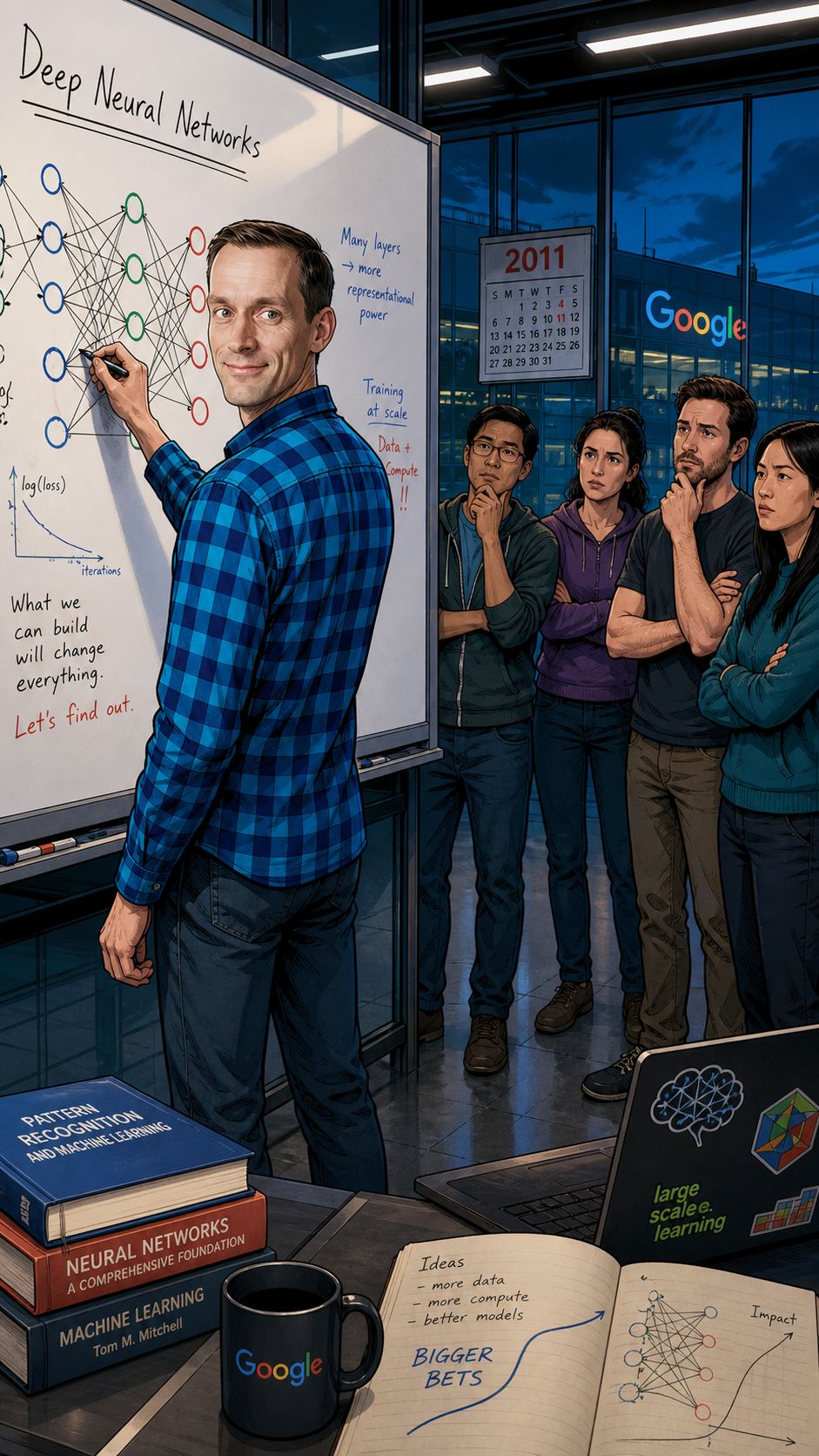
The Man Who Built Google's Brain — page 2 panel 6: In 2011, Jeff Dean co-founds Google Brain, choosing to bet early on neural networks. The room is uncertain, but his conviction is calm.
Jeff Dean:Neural networks will change everything.
Page03/ 036 panels
1
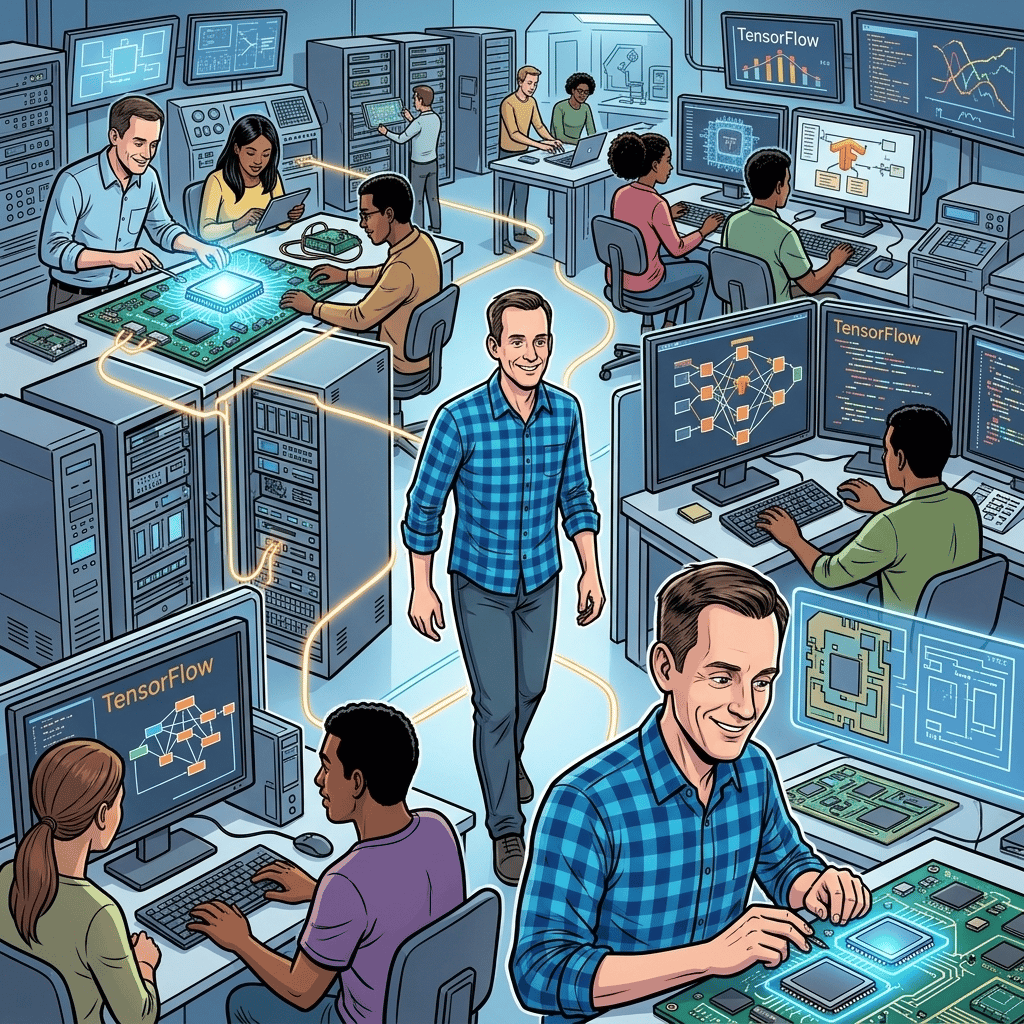
The Man Who Built Google's Brain — page 3 panel 1: A montage shows Google Brain's team building TensorFlow and TPU chips, turning deep learning into practical tools for millions of developers.
Google Brain built TensorFlow and TPU chips for a new generation of developers.
2
The Man Who Built Google's Brain — page 3 panel 2: As Google's Chief Scientist, Jeff Dean watches Gemini models demonstrate the ability to see, read, and reason. The quiet infrastructure engineer recognizes the scale of what has changed.
Jeff Dean
The systems are beginning to understand the world.
3
The Man Who Built Google's Brain — page 3 panel 3: A vast network of developers and researchers uses the tools Jeff Dean helped create. His influence stretches far beyond the original startup office.
The quiet infrastructure engineer had become one of AI’s most influential figures.
4
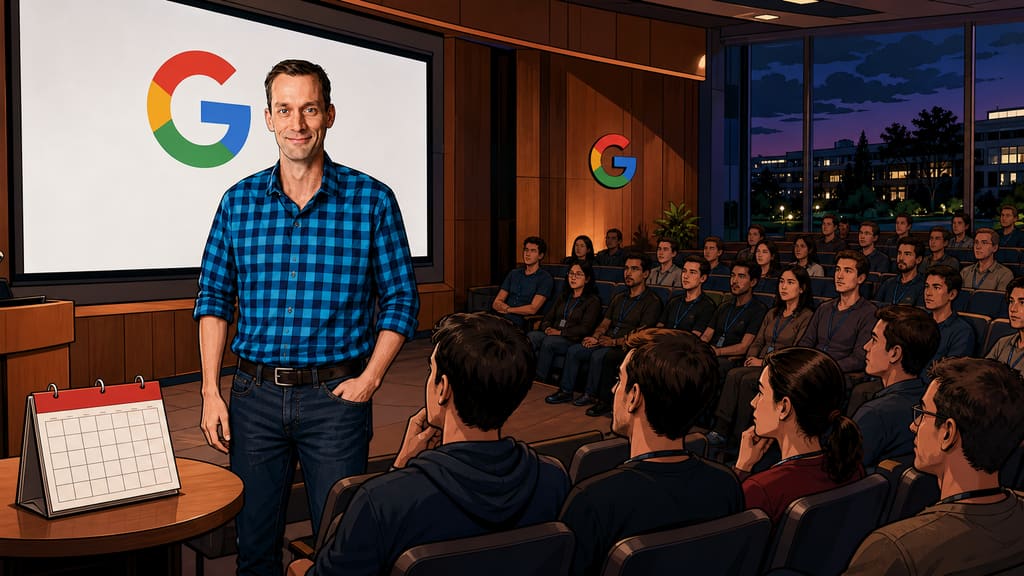
The Man Who Built Google's Brain — page 3 panel 4: On August 5, 2026, Jeff Dean stands before a Google audience and announces that he is leaving after twenty-seven years. The room falls silent.
Jeff Dean:After twenty-seven years, I’m leaving Google.
5
The Man Who Built Google's Brain — page 3 panel 5: Across the internet, feeds pause and screens go still as people absorb the news. An era of computing feels as though it has closed a chapter.
For a moment, the internet paused. An era had closed its chapter.
6
The Man Who Built Google's Brain — page 3 panel 6: Jeff Dean meets Sanjay Ghemawat and old friends again, now around a new table marked Discovery Loop. The next chapter begins with a larger ambition: automate science itself.
Jeff Dean:Now we build for all of discovery.
Sanjay Ghemawat:Thousands of experiments at once.

Characters (2)

Story Prompt

Written by qcrao

The Man Who Built Google's Brain In 1999, a young engineer named Jeff Dean joined a tiny startup called Google as roughly employee #30. The search engine was slow and kept falling over under growing traffic. Jeff rewrote Google's core systems — crawling, indexing, and query serving — making search fast enough to handle the entire internet. Working side by side with his longtime friend Sanjay Ghemawat, the two coded together at one keyboard. Together they created MapReduce and Bigtable, the technologies that let thousands of cheap machines work as one giant computer. These papers reshaped how the whole industry builds large-scale systems. Engineers began trading "Jeff Dean Facts" like superhero legends: "Compilers don't warn Jeff Dean — Jeff Dean warns compilers." He had become a living myth of programming. In 2011 he co-founded Google Brain, betting early that neural networks would change everything. His team built TensorFlow and the TPU chips, putting deep learning into the hands of millions of developers. As Google's Chief Scientist, he helped drive the Gemini models — AI that could see, read, and reason. The quiet infrastructure engineer had become one of the most influential figures in AI. On August 5, 2026, after 27 years, Jeff Dean announced he was leaving Google. The internet paused for a moment — an era of computing had just closed its chapter. But it wasn't an ending. With Sanjay and old friends, he founded Discovery Loop — a company that wants AI to run thousands of experiments at once and automate science itself. The man who built Google's brain now wants to build one for all of discovery.

Show more
qcrao avatar
Created by
qcrao